Showing posts with label Chinese New Year. Show all posts

Friday, March 7, 2014

Collage Madness _ Chinese New Year


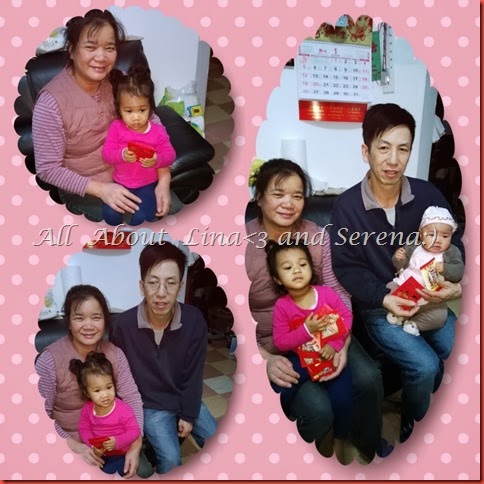
I know that I have not been posting pictures of my little babies, who are growing too fast :(  These pictures should had been my blog posts for the month of February. So in this post and probably the next few posts, will be pictures. I have been very interested in collages, and making collages.


Friday, January 31, 2014

Happy Chinese New Year ! Gong Xi Fa Cai!


Thursday, January 30, 2014

Countdown to 2014 Chinese New Year - New Year's Eve - Books for Children

Books are so important to us. Lina<3 loves to read. Here are some that I thought were interesting reads which I had selected from Amazon. I have not brought any for us yet, but will soon, (stay tune for that).

Dragon Dance: A Chinese New Year : A Chinese New Year Lift-the-Flap Book     
It's Chinese New Year and there are so many fun things to do! Shopping at the outdoor market for fresh flowers, eating New Year's dinner with the whole family, receiving red envelopes from Grandma and Grandpa, and best of all-watching the spectacular Chinese New Year's parade! Introduce the customs of Chinese New Year to even the youngest readers with this festive new lift-the-flap book.
In a brightly colored board book, perfect  for the youngest child, Newbery Honoree Grace Lin tells the tale of a Chinese American family as they prepare for the Lunar New Year. Each family member lends a hand as they sweep out the dust of the old year, hang decorations, and make dumplings. Then it's time to celebrate. There will be fireworks and lion dancers, shining lanterns, and a great, long dragon parade at the end!
Lin's bold and gloriously patterned artwork makes for an unforgettable holiday tale. Her story is simple and tailor-made for reading aloud to young children, and she includes an informative author's note for parents, teachers and children who want to learn even more.


Wednesday, January 29, 2014

Countdown to 2014 Chinese New Year - 2 Days Left - Food

Food is always important in any holiday. For the Chinese New Year, there are traditional foods that should be prepared as a way to bring in more good luck, and some other foods that should be avoided for the new year as a sign of bad luck. For our new year's dinner, we will be headed PorPor's house :)

I found that TLC cooking article "10 Chinese New Year Food Superstitions"  to be the best summary about the traditions of Chinese New Year's food. Here is their countdown listed below:


10: Oranges and Tangerines
Two of the most common food symbols of the Chinese New Year are tangerines and oranges. Whereas tangerines represent wealth, oranges are a popular symbol of good luck. The associations come from a similarity between the Chinese words for tangerine and gold, as well as a resemblance between the words orange and good luck. It isn't uncommon in Chinese culture for similar sounding or spelled words with very different meanings (homonyms) to become suggestive of one another over time. Oranges and tangerines are also a bright, vibrant orange, a happy color that's associated with good fortune.
During Chinese New Year, tangerines and oranges are displayed as decorations and are also exchanged among friends and acquaintances. Sometimes, small trees are kept for this purpose. When giving these fruits as gifts, offer them with both hands. It's polite for the recipient to refuse at first, so keep trying.
Fruit is almost always a good Chinese New Year's gift. Oranges and tangerines are a traditional favorite, though, and can also represent happiness and abundance, as in an abundant harvest. If there are still leaves and a stem attached to the fruit, it also means fertility.
9: Noodles
Noodles are an ancient food, although there's some debate about where they were first created. There's no doubt that noodles are an important addition to many traditional Chinese dishes like lo mein and chow mein. Noodles are a staple of the Chinese diet and can be made from a number of ingredients, like rice flour, wheat flour or mung bean starch.
When served during Chinese New Year, noodles shouldn't be cut or broken into pieces. Long noodles represent a nice long life, although eating them could get a little messy. Just to be on the safe side, you might want to consider having a couple of sturdy napkins on hand.
8: Chicken
Whole chicken is a popular dish during Chinese New Year because it represents togetherness and rebirth. It's symbolic of the family and can also signify unity and prosperity as a group. After all, chicken is a good source of protein and can feed even a large family when prepared carefully. To make sure that the symbolism is complete, it's a good idea to boil or steam the chicken with the head and feet still on to represent unity. Go the extra step and make a symbolic offering of chicken to your ancestors, too. You may not get any takers, but showing respect for the past and enthusiasm for the future is a big part of the holiday.
In Chinese tradition, melons and pomelos are also symbolic of family and are the embodiment of the hope that the family will remain large and whole. The pomelo, a citrus fruit that looks like a big pear and tastes a little like a sweet grapefruit, is also a symbol of abundance.
7: Chinese Dumplings
A popular family New Year's Eve tradition is to get together and make boiled dumplings (jiaozi). Boiled Chinese dumplings are fun and relatively easy to make, and their fried counterparts, pot stickers, are also a Western favorite. Filled with vegetables like cabbage and spring onion, and flavored with pork or shrimp, Chinese dumplings make a filling appetizer or side dish any time of year.
If you plan on following this Chinese New Year tradition, encourage everyone in the family to participate in the preparation and conceal a coin in one of the dumplings in the batch. If the person who finds it doesn't chip a tooth, he's destined to have a very, very lucky year.
6: Pomegranates
Pomegranates are a natural for Chinese New Year. They're filled with colorful seeds for fertility and are a bright vibrant red, which represents happiness and repels evil spirits. They're also good for you, with an abundance of antioxidants and vitamin C to help you recuperate after the celebrations are over.
You probably already know that pomegranate juice is a great pick-me-up and base for a number of alcoholic beverages (it's often made into a sugar syrup called grenadine), but pomegranate seeds are also refreshing in salads and perk up the color and sweetness of meats when added to marinades. They make an eye popping garnish too, especially when paired with slivered carrots, purple cabbage or orange segments.
If you want to experiment, peel a fresh pomegranate and sample the seeds. They have a predominantly sweet flavor with just a slight sour aftertaste. They're wonderful as a fresh, cold dessert all by themselves.
5: Seeds
Seeds are important in Chinese New Year celebrations because they're symbolic of the harvest, abundance and fertility. They represent the potential for good things to come and appear again and again as the embodiment of hope.
Many seed-rich fruits are either used as ingredients in classic dishes or for decoration. Besides the symbolic significance of the seeds in fruits like oranges, tangerines, melons, pomegranates and pomelos, seeds are also used by themselves or as major ingredients. Red-dyed melon seeds are added to candies and offered to guests or children, and the sweet seeds of the lotus are candied, too. Red melon seeds have multiple meanings because they incorporate the significance of red for joy with the potential and hope represented by the seeds themselves.
4: Vegetarian's Delight
A large all vegetable medley is a favorite New Year's Day dish. This classic is sometimes called Vegetarian's Delight, Jai or Buddhist's Delight. Make sure to use plenty of root vegetables. Chinese New Year is the beginning of the spring planting season, so it's a great time to use up those stored winter veggies and clear the shelves for spring greens.
To add a little extra good fortune, be sure to include black moss to attract wealth, lotus seeds for fertility, and bamboo shoots for strength and longevity. Some other common ingredients are tiger lily buds, red dates (jujubes), Chinese cabbage, cloud ears and water chestnuts.
3: White Foods
Although you'll see tofu (fresh bean curd) in some Chinese New Year recipes, serving white ingredients is usually considered bad luck during the 15-day celebration. White represents bad fortune and even death, although in other areas of Chinese life it can mean purity, too.
Color is often symbolic during this time, and foods that are red, orange, green or gold are considered particularly auspicious. This is one of the reasons tangerines, oranges, red melon seeds and pomegranates are popular food gifts. Their colors are believed to represent the following:
  • White - bad luck, death, loss, mourning
  • Red - happiness, purity, celebration, health, luck
  • Orange - happiness, luck
  • Gold or yellow - happiness, prosperity
  • Green - luck, harmony
2: Prosperity Tray
The Chinese New Year prosperity tray is usually a hexagonal or round dish that contains eight traditional candy varieties. The number eight represents prosperity, and each candy has symbolic significance. Made from traditional ingredients, like red melon seeds, peanuts or candied melon, these treats are offered to children and guests.
When an adult takes a candy from the tray, he replaces it with a red envelope, or Lai See, that contains a money gift for good luck. The amount of the gift usually ends in an even number, often an eight [source: Moriarity].
The eight traditional candies are:
  • Candied melon - good health
  • Coconut - togetherness
  • Kumquat - prosperity
  • Lychee nuts - family ties
  • Longan - fertility (for bearing sons)
  • Lotus seeds - a large family
  • Peanuts - long life
  • Red melon seeds - happiness, truth
1: Fish
It's traditional to serve a whole fish on New Year's Eve and save half for the next day. The Chinese word for fish is similar to the word for plenty, and saving part of the fish for later consumption insures symbolic abundance for the future. In true Chinese fashion, buy the freshest fish you can. When exploring the options, insist on a fish with clear eyes and a clean, not fishy smell.
As with chickens served during this time, it's important to keep the fish whole, with the tail and head intact. The body of the fish represents family unity or togetherness. If you're serving guests, place the fish on the table facing them as a sign of respect and welcome.


Also, check out Steamy Kitchen's Chinese New Year 2014: What to eat if you want a raise!

If you are got hungry from reading about these foods, and to try some recipes,  check out : Huffington Post's
Happy Chinese New Year: Now It's Recipe Time.

If you are a Godiva chocolate lover like I am, please check out their tribute to the Chinese New Year, Year of the Horse, here.

We are going to make dumplings, and chicken egg rolls with PorPor tomorrow :)

Tuesday, January 28, 2014

Countdown to 2014 Chinese New Year -3 Days Left - What is all about?

What is Chinese New Year (or Lunar New Year) all about? As I tried to teach it to my daughter, Lina<3.  It is about the Chinese culture, and family. It is about wishing each other well. It is the most important holiday for us, Chinese people (to be politically correct, the Chinese are not the only ones celebrating this holiday). It is about a new year, looking forward and not back. There are many traditions, superstitions, foods,  events, and lai see (red envelopes with money) during the holiday. 

Please check out these sites to find out more about the holiday:


http://www.chinesenewyears.info/

http://www.suntimes.com/lifestyles/25155545-423/lucky-chinese-year-of-the-horse-begins-jan-31.html 

http://www.chinesefortunecalendar.com/2014/2014Zodiac.htm

http://www.chinatoday.com/culture/zodiac/zodiac.htm 

http://www.huffingtonpost.ca/2014/01/09/chinese-new-year-2014-horse_n_4568979.html

Monday, January 27, 2014

Countdown to 2014 Chinese New Year – 4 Days Left - Fish Craft

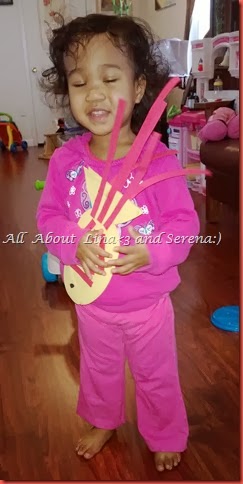
As we are coming to close to the end of the Year of the Snake.  In our household, we will be doing some Chinese New Year artwork to welcome the new year, the Year of the Horse. Today, we did a fish craft. I got the idea from Scholastic (Thank you Scholastics). Since I did not have some of the items needed for the first craft, we improvised with just cardboard cut into a fish shape; red (cut into long and short strips), yellow (cut into a fish shape) & black (for the eyes)  construction paper; glue; and scissor. It was fun, and turned out great. 

Besides making the fish, Lina<3 learned about how yellow (gold), and red are good luck the Chinese New Year, and for Chinese people.  Lina<3 learned her some of her colors. Lina<3 is ready for the New Year, she has been saying “gong xi gong xi” (congratulations in Mandarin) and bowing as she says it.  After we done with the fish, we played with the fish :)  These fish are going to PorPor's house as a gift for them...shhhh do not tell them ;)
 

Here are some more art and craft projects (click on the links below): that we are looking into doing in the next two days or so:

more fish craft;

coloring pages   are extremely simple and easy to do, and  here are more coloring pages;

dragon art work (it looks really interesting to do and I think that Lina<3 would enjoy this a lot) and more dragon;

firecrackers (I am going to use toilet paper rolls and ribbons for this projects, possibly paint);

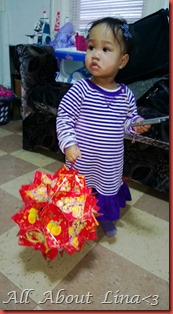
lanterns (Oh I love lanterns, I remember making them as a child, I would totally make this), lanterns here and here is a tutorial about lanterns;

zodiac animal book;

chinese drums;

and one stop shop for Chinese New Year art/games/fun .

Sunday, January 26, 2014

Countdown to 2014 Chinese New Year - 5 Days Left - Events around the NYC

As the Year of the Snake slithers away in a few days, the Horse will gallop into the Chinese New Year.

Here are some events that will highlight the 2014 Chinese New Year with NYC area: (mark your calendars)
 
 Date : January 31, 2014 | Friday | 11:00am
 Location : Sara Roosevelt Park (Grand & Forsyth St.)


The parade is the highlight of the Chinese New Year celebrations in Flushing. Look for dragon dancers, steel drummers, and fireworks. About 4,000 people march each year.

Viewing Stands: TBD, usually at Flushing Library (Main and Kissena) and at the parade's end. Most people watch on Main St.

Route: Begins, Union St and 37th Ave and usually ends at Main St and 39th Ave.

  • When: February 8, 2014. Start time is 10 a.m.

The site below has more listings of events:
http://gonyc.about.com/cs/holidays/a/chinesenewyear.htm

Friday, February 15, 2013

Gong Xi Fa Cai!

Gong Xi, Gong Xi my little Lina<3. Mommy loves you very much. It is day six (out of 15 days) of Chinese New Year. It has been a busy few days, so Mommy was not able to write to you.

You enjoyed a pre-Chinese New Year's Eve dinner with your grandparents because PorPor was working Chinese New Year's Eve and day one. You love spending time with PorPor at her house. Although there was a blizzard of 2013 that came. Thank goodness, we made it through okay, with no power outages, not much by us.

The first day of Chinese New Year, we had enjoyed a very nice lunch with GongGong and KahnFu. We went to visit your great grandparents, and great uncle. You probably will only remember the lai see (red envelopes filled with money in Cantonese). You were very shy and did not want to play at all. All you wanted to be in was Mommy or Daddy's arms. :)

On day four of Chinese New Year, you spent the day with PorPor and had a lot fun playing with her. You know how to bow with your hands whenever Mommy says "Gong hay fat choi" which makes PorPor smiles.


Let's look at how to greet one another on Chinese New Year:

Spring Festival and Kids: A Festive Poem About the Traditions of Chinese New Year
A poem about Chinese New Year
Spring's here! It's Chinese New Year!
"Gong Xi Fa Cai" - you will hear.
The Night before, I'll stay past two
To Mom and Dad, "Long life to you!"

When daylight comes, I'll rise and shine.
It's a full day of 'hongbao' time!
I'll get so many till my pockets are full-
From parents, aunties... and uncles too.

Exchanging mand'rins two by two;
Goring goodies by the handful;
Vis'ting relatives - life is good;
Their usual phrase - "You've grown a foot!"

Chinese New Year is full of fun!
Who says tradition weighs a ton?
(Maybe those juicy mandrins) Yes -
A wee part of our Chinese fest.


This is a little touch of Chinese culture.

After Christmas, most of the decoration in the streets will be very efficiently removed to make way for the Chinese New Year decorations.

"Gong Xi Fa Cai" is a greeting that we wish other people. It means to wish them prosperity.

In the Chinese Tradition, little Children stay up past midnight (the eve of Chinese New Year) This is believed to bring longevity to their parents.

Hong Baos, also called red packets are paper envelopes that are designed with Chinese New Year motifs (pink blossoms, golden flowers, Chinese paintings, the Chinese word for spring or prosperity...) Inside these Hong Baos people put money inside and give it to children. Money that is put inside is only an even amount - 2, 4, 6, 8, 10... 20 dollars... as odd amounts of money are considered inauspicious.
Hong Baos are also given to special occasions such as someone's birthday or wedding.

Mandarin oranges are typically exchanged in twos, or even numbers but not odd. They represent gold.

During Chinese New Year, families will get together and people will travel long distances to have their family reunion. However in modern today, many families also seize this opportunity to steal a getaway as everyday life is so busy. Besides, school is also out during this time.

At people's homes (we usually visit the elders(more elderly members of the family)) we sit around and eat goodies like pineapple tarts and cookies. And it is during this time we get to see our distant relatives - a long distance affair.

Monday, February 4, 2013

Countdown to Chinese New Year - Day Seven - Numbers

Lina<3, the topic for today is numbers, which numbers are the luckiest and unluckiest, according to the Chinese. You actually countdown the days to Chinese New Year with Mommy this morning, well Mommy did most of the work. Of course, Mommy had told you that eight is a very lucky number and four is very unlucky.


Lucky and Unlucky Numbers in Chinese Culture
The study of Chinese culture is very interesting because they have so much superstitions and beliefs like numerology, using the laws of heaven and earth (astronomy and geography) -- "feng shui", choice of color etc. One of their main Chinese belief is that numbers contribute a lot to their good luck and their happiness in life. Their belief pertaining to a particular number and the luck it may bring affect their behavior and choices in life . Chinese beliefs and culture revolves around getting good vibes or good luck and the pursuit of happiness and long life. In this article, we are going to look at lucky and unlucky numbers in Chinese culture, and the certain meaning of a particular number.

Have you ever wondered why they chose and fought hard to be the host of the Olympic 2008? they started the opening ceremony on August 8, 2008? It is because the number 8 is a lucky number for them and they believe it will bring good luck to their players if they start the Olympics on that date. Are you interested yet, come on now we will take a look at lucky and unlucky numbers in Chinese culture.

Chinese numbers and their symbols

Chinese numbers and their symbols


First we are going to look at their definitions of numbers
  • Zero (0) -- simply means All or NOTHING as it is an absolute number
  • One (1) -- Individual. Aggressor -- "The Yang which is the other balance of Yin"
  • Two (2) -- Stability or Balance means Union or Receptive. "The Yin which is the other balance of Yang
  • Three (3) - means talking and understanding --Communication plus interaction plus Neutrality.
  • Four (4) -- Creation, Death
  • Five (5) -- Action or Restlessness.
  • Six (6) -- Fluidity, Responsibility, Reaction
  • seven (7) -- Mind, Consciousness and thoughts
  • Eight (8) -- Sacrifice, Work Hard and Power, Infinite -- no beginning no ending, continuous.
  • Nine (9) -- Highest level of change
  • Ten (10) -- Being born again or Rebirth

General Rules on Numbers
  • To consider if the number is lucky means to consider the pronunciation of the number and they sound pronunciation of another word and it should carry a positive connotation or vibes.
  • Even numbers are preferred but not the number four
  • Four is the most dreaded number - it means death
  • Eight is a lucky number and is always good for business
  • For odd numbers, seven implies anger and abandon, it is both an unlucky and lucky number
  • Nine means longevity and eternity. It is the luckiest number
  • Fourteen as well as 4 are the most feared number in Chinese superstition.
  • Thirteen is also an unlucky number to Chinese people so they don't usually have thirteenth floor or fourteenth floor in any buildings
  • They usually begin a new business on the 8th day. Number 8 is lucky for business as it brings unending money and good luck due to the shape of number -- infinite shape
  • Certain numbers are auspicisos meaning lucky and inauspicios meaning unlucky. This goes for single digits and or any combinations of numbers
Valentines Day is nearing so when you give flowers to your loved one consider these:
  • One means you are my love
  • Two means we are together, we are best as pairs
  • Three means "I love you"
Lucky and Unlucky Numbers in Chinese Culture
  • Odd Numbers generally mean the Yang energy -- celestial, space, heaven -- above earth and masculine
  • Even Numbers generally mean Yin energy and it means terrestrial, earthly , earth and is feminine
Lucky or Unlucky Chinese Numbers
  • Zero means the pre inception, nothingness, but cannot be identified, it is deprivation of the senses
  • One means loneliness, beginning, masculine. One has a thrusting energy that surges forth new growth and potential. One corresponds with the Chinese Zodiac symbol of the Rat. The energy of one rules over the Northern direction in Feng Shui practices.
  • Two is considered a good number in Chinese culture because pairs are always good for them. They always use double things to emphasize things as well, like double happiness, double coins etc.It also means a female. "Two corresponds with the Chinese zodiac symbol of the Ox plus it governs North plus Northeast directions in Feng Shui".
  • Three is also a lucky number for them as this is similar to the character of birth. The "Chinese Tiger" is the Chinese zodiac symbol for number three-- and East plusNortheast is the designated direction in Feng Shui-
  • Four is an unlucky number and it means death. That is why there is no 4th floor usually in Chinese buildings -- the Chinese zodiac symbol for number four is the Rabbit -- and east is its direction in Feng Shui --
  • Five -- this is a lucky number and is usually link to the five elements which are wood, earth eater fire earth and metal. This number is usually linked to the Emperor of China as well and the Tienanmen gate. "A great practice to familiarize ourselves with the Chinese number five is to adopt the founding five Chinese blessings like Wealth-- Happiness-- Longevity -- Luck and Prosperity. "The Chinese zodiac symbol for number five is the Chinese Dragon plus its corresponding direction in "Feng Shui" is East and Souththeast-
  • Six -- The number six usually means fluidity -- blessings and it is good for business, unlike in the Western world where we don’t like the number six, in Chinese culture it is a lucky number. "When we contemplate the meaning of number six in our lives we are contemplating the perennial mysteries of life contained in celestial power-- cosmic focus and the cyclical nature of time. "The Snake" -- is the Chinese zodiac symbol for number six plus South and Southeast is its direction in "Feng Shui" practices--
  • Seven -- This is an unlucky number in Chinese. I dont know why Tony Parker and his wife Eva Longoria married in France on July 7, 2007. It sio the month of ghost July. The number six, eight and nine are lucky dates as well. And the Chinese zodiac symbol for seven is the horse plus South is the "Feng Shui" coordinate--

  • Eight -- This is their favorite number aside from nine and simply means prosperity. It is interesting to note that words and the number are similar - number eight and fortune "Baat and faat".The value of eight is also linked with Buddhism -- the Lotus flower with eight petals. "The Sheep" is the Chinese zodiac symbol for this number and South--Southwest is the "Feng Shui" direction--
  • Nine-- is the biggest of single numbers and it connotes the "Emperor of China" -- his robes are with nine dragons on it. Nine is a lucky number for Chinese because it connotes longevity, happiness and good luck. Since the number nine is the highest number it means it is reaching the highest cosmic satisfaction and its Chinese zodiac symbol is Monkey and its "Feng Shui" direction is West/Southwest --
Some interesting facts about the number 8
  • The Olympics in Beijing kicked off in August 8, 2008 at 8 pm, 8 minutes and 8 seconds after 8 pm.
  • A Chinese man offered to sell his license plate number -- A88888 for USD164,000
  • A number of a telephone with all eight digits on it was sold for 270, 723 in Chengdu, China.
  • The number eight can also be linked to the lotus flower with eight petals
  • The Bank of Commerce in New York when they have grand opening raffled off safety deposit box number 888.
  • it was in 1994 when a Chinese businessman paid 1.7 million USD for a car license plate with -9- --- a number that was particularly lucky that year because the Chinese word for --nine-- sounds like the Chinese word for "dog," and 1994 was the year of that animal.
  • A Chinese man paid 215,000 USD for the lucky number for a cellphone "133-3333-3333".
  • Another phone number 8888-8888 has also been purchased in China..

Sunday, February 3, 2013

Countdown to Chinese New Year-Day Eight--Year of the Snake

Lina<3, is that your little head of yours full of knowledge for the Chinese New Year? Is this too much information for you? I hope not. Today, let's examine Chinese Zodiac signs.

The coming 2013 year of the black Snake is going to be astute in observations and deft in actions. The Snake symbol of the 2013 year is an active, snaky and has a very seductive nature. The 2013 Snake of Kuei Szu year has ability to read complicated situation quickly in a controlled manner which is good for business. But 2013 Snake need to watch for fanatical commitments since Snakes inclination to spend money quickly than earn them may produce tensions in personal relationships.

Snake Personality

The person born in the year of snake is the wisest and most enigmatic of all. He/she can become a philosopher, a theologian, a political lizard or a wily financier. Such person is a thinker who also likes to live well. The snake - person loves books, music, clothes, and fine food; but with all his fondness for the good things of life, his innate elegance gives him a dislike for frivolities and foolish talk.

They like communicating and like interesting conversations, although if the conversation becomes repetitive their attention may soon wander. It is almost impossible to fix their attention for long talking about the weather. They prefer to focus on new interesting unusual ides and intelligent discussion in general.

These people have a special feeling that enables them to judge situations correctly and so they are alert to new possibilities and when they have an idea of what to and how to do it, they you pursue it persistently and energetically. These people are self-confident and usually don't bother themselves listening to someone else's opinion. But this side of their character has also a negative load. Refusing to listen to constructive advice, they may get into needless trouble. Although it is difficult for such people to take advice, they are patient with others when it comes to give a hand of help, and their ability to look at a problem from a variety of angles is extremely appreciated. When faced with a dilemma snake people as a rule act with speed and conviction, since they believe intensely in what they are doing and rarely waste time or energy on projects lacking in good potential.

It is important to remember that life is not all work and competition. Snake person perfectly knows how to wind down and relax when such opportunity arises. This type of people often makes protective and caring friends. However, their anger can be quickly aroused, and they will soon get back if there is a suspicion that someone has taken advantage of their trust or has hurt those close to them. 

Snake Love Affairs

In love, the male snake is romantic and charming. He possesses a sense of humor while the female is usually beautiful and successful. In case person born in the year of the snake chooses a partner, he/she will be jealous and possessive. Even when the relationships are left behind this possessiveness will be clouding the snake's life. Rejection is the worst thing that can ever happen to the snake person. Such people must be received, welcomed, accepted and approved by those with whom they come in contact. Generally they need a lot of security.

It often happens that snake people have one set of rules for themselves and one for their partner and this side of their nature can become a basis for misunderstandings in the future. But, when they are really romantically involved these people are also loving and attentive, stimulating and playful, though it takes time for them to get over their fears or discuss their weaknesses. The best partner for a snake type person is someone who would give him freedom, but it is also important for him to feel secure and adored.
Snake Career

In money matters, people born in the year of snake have good luck; they don't have to worry about money too much, such people will always be able to find couple of banknotes if they need it. The snake person has an ability to read complex situations quickly and then set about resolving them in a quiet, controlled manner. It is much more convenient and useful for this people to work independently, because in this case they have freedom to travel and negotiate on their own terms. The snake people can not stand being limited by others and this is another reason for them to work solo. People born in this year are logical and organized workers and have all the qualities needed to acquire new skills. They also have a very good memory and that enables them to fulfil the projects thoroughly. They are purposeful and getting towards their aim spotting potential troubles and reacting immediately. On the other hand, should they have achieved their goal the snake people usually withdraw to gather their thoughts and rest. But they need not much time to renew their energies and be ready for new challenges.
Some Famous Snakes: Kim Basinger, Randy Crawford, Bob Dylan, Greta Garbo, Art Garfunkel, Audrey Hepburn, Paul Hogan, Liz Hurley, Carole King, Dean Martin, Robert Mitchum, Mike Oldfield, Ryan O'Neal, Dorothy Parker, Brad Pitt, Brooke Shields, Paul Simon, Dionne Warwick, Oprah Winfrey, Virginia Woolf, Susannah York.
Compatible with : Ox, Rooster, Dragon
Less Compatible with : Rat, Rabbit, Snake, Horse, Dog, Ram
Least Compatible with : Pig, Monkey, Tiger

There are more information about the other 11 Chinese Zodiac signs here and here as well.

Here's something fun to try: Chinese Zodiac Sign Calculator.  Mommy tried it and it was accurate. Give it a try, let's Lina<3 and I know if it is accurate or not.

Saturday, February 2, 2013

Countdown to Chinese New Year-Day Nine--Taboos and Superstitions

Lina<3, it is nine days to Chinese New Year. Let's get ready for it by learning things some of the superstitions. The Chinese people take these superstitions very seriously, so please pay attention to what Mommy reads (the Chinese New Year taboo and superstitions below) to you.
CHINESE NEW YEAR TABOO AND SUPERSTITIONS

TABOO AND SUPERSTITIONS
House Cleaning
The entire house should be cleaned before New Year. On New Year's Eve, all brooms, brushes, dusters, dust pans and other cleaning equipment are put away. Sweeping or dusting should not be done on New Year for fear that good fortune be swept away. After New Year's day, the floors may be swept. Beginning at the door the dust and rubbish are swept to the middle of the parlor, then placed in the corners and not taken or thrown out until the fifth day. At no time should the rubbish in the corners be trampled upon. In sweeping, there is a superstition that if you sweep the dirt out over the threshold, you will sweep one of the family away. Also to sweep the dust and dirt out of your house by the front entrance is to sweep away the good fortune of the family; it must always be swept inwards and then carried out, then no harm will follow. All dirt and rubbish when taken out must never be through the front entrance but by the back door.

BRINGING IN THE NEW YEAR AND EXPELLING THE OLD
Shooting off firecrackers on New Year's Eve is the Chinese way of sending out the old year and welcoming in the new year. On the stroke of twelve on New Year's Eve, every door in the house, and even windows, have to be open to allow the old year to go out.

NEW YEAR ACTIVITIES SET PRECEDENT

All debts had to paid by this time. Nothing should be lent on this day, as anyone who does so will be lending all the year. In olden times when tinder and flint were used, no one would lend them on this day or give a light to others.

Everyone should refrain from using foul language and bad or unlucky words. Negative terms and the word "four" (Ssu) as it sounds like the like the word for death are not uttered. Death and dying are never mentioned and ghost stories are totally taboo. References to the past year is also avoided as everything should be turned towards the new Year and a new beginning.

If you cry on New Year's day, you will cry all through the year. Therefore, children are tolerated and are not spanked, even though they are mischievous.

MISCELLANEOUS NEW YEAR SUPERSTITIONS
For those most superstitious, before leaving the house to call on others, the Almanac should be consulted to find the best time to leave the home and the direction which is most auspicious to head out.

The first person one meets and the first words heard are significant as to what the fortunes would be for the entire year. It is a lucky sign to see or hear songbirds or red-colored birds or swallows.

It is considered unlucky to greet anyone in their bedroom so that everyone, even the sick, would get dressed and sit in the living room.

Do not use knives or scissors on New Year Day as this may cut off fortune.

It is doubtful that Chinese today actually believe in these do's and don'ts however, these traditions and customs are still practiced. These traditions and customs are kept because most families realize that is these very traditions, whether believed or not, that provide continuity with the past and provide the family with an identity.

PERSONAL APPEARANCE AND CLEANLINESS
One New Year's Day, we are not suppose to wash our hair because it would mean we would have washed away good luck for the new year. Red clothing is preferred during this festive occasion. Red is considered a bright, happy color, sure to bring the wearer a sunny and bright future. It is believed that appearance and attitude during New Year's sets the tone for the year to come. Children and unmarried friends, as well as close relatives are given lai see, little red envelopes with crisp one dollar bills inserted, for good fortune.